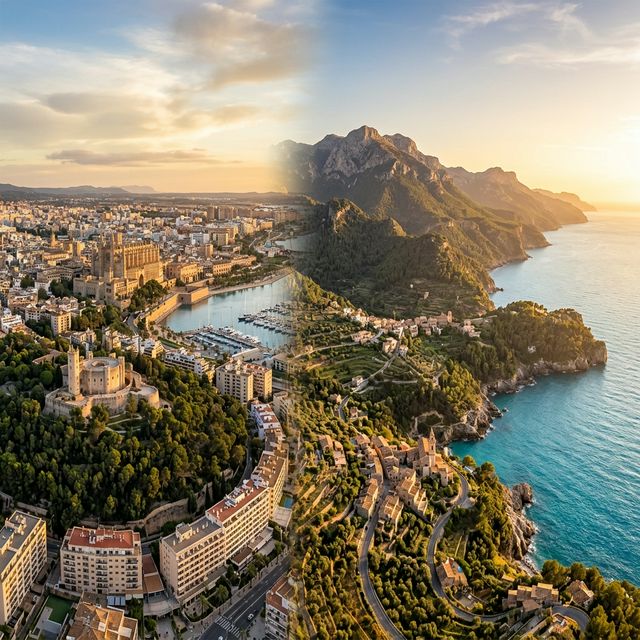
Mallorca is not a uniform property market. The island harbours very different realities depending on the area: from the ultra-premium south-west coast market to the value opportunities of the rural interior. Understanding these differences is essential for investing wisely.
In this analysis we break down Mallorca’s main investment zones, their characteristics, expected yields and the type of investor each best suits.
Palma: the capital and the most liquid market
Palma accounts for 50% of Mallorca’s population and the island’s most dynamic property market. Its diversity of neighbourhoods offers options for every investment strategy.
Old town and centre
Palma’s old town is one of Spain’s highest-appreciating areas over the past decade. Renovated historic buildings, penthouses overlooking the cathedral and charming flats on pedestrian streets.
- Average price: €5,000–8,000/m²
- Long-term rental yield: 3–4%
- Holiday rental yield (with ETV): 6–10%
- Profile: High-budget investor seeking appreciation and holiday rental returns
Santa Catalina and El Terreno
Fashionable neighbourhoods with a cosmopolitan atmosphere, gastronomy and nightlife. These areas have undergone intense gentrification in recent years.
- Average price: €4,500–6,500/m²
- Long-term rental yield: 4–5%
- Profile: Investor seeking rentals to professionals and expats
Son Gotleu, Pere Garau and La Soledat
Working-class neighbourhoods with significantly lower prices and high demand for long-term rentals. Higher gross yields but also greater tenant turnover.
- Average price: €2,000–3,000/m²
- Long-term rental yield: 6–8%
- Profile: Investor seeking cash flow on a moderate budget
Calvià: the premium tourist corridor
The municipality of Calvià encompasses some of Mallorca’s most tourist-heavy areas: Santa Ponsa, Peguera, Palmanova, Magaluf and Costa de la Calma. It’s the island’s holiday tourism epicentre.
- Average price: €3,500–6,000/m²
- Holiday rental yield (with ETV): 6–9%
- Advantage: Established tourist demand, good infrastructure
- Risk: Seasonal tourism dependency and increasing ETV licence restrictions
- Profile: Investor seeking holiday rental returns with lower off-season occupancy
Andratx and the south-west coast: luxury
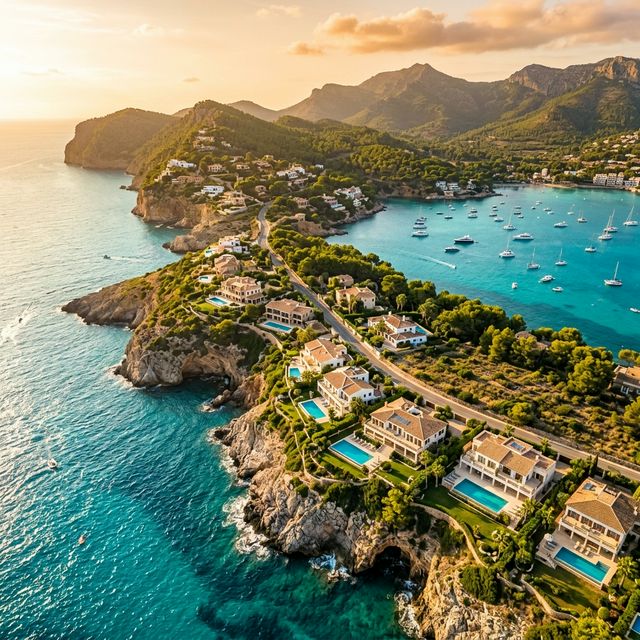
Andratx, Port d’Andratx, Camp de Mar and San Telmo form Mallorca’s luxury corridor. The island’s highest-value properties are concentrated here.
- Average price: €6,000–15,000/m²
- Yield: Low on rental (2–3%), but high capital appreciation
- Profile: Wealth-preservation investor seeking long-term value growth
Serra de Tramuntana: heritage and exclusivity
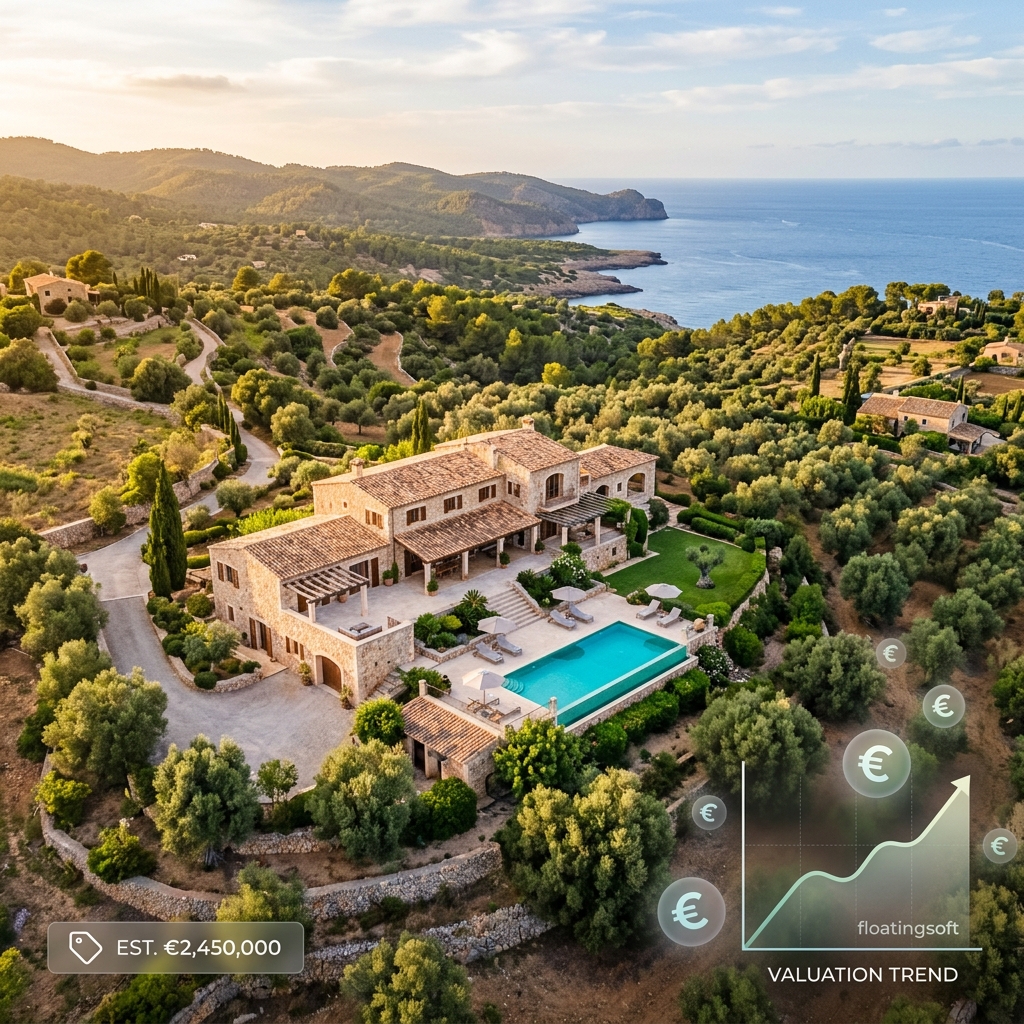
The Tramuntana villages (Sóller, Deià, Valldemossa, Fornalutx, Banyalbufar) offer a unique market combining historic heritage, UNESCO landscape protection and extreme scarcity of supply.
- Average price: €4,000–8,000/m² (varies hugely by village)
- Holiday rental yield: 5–8% (highly seasonal)
- Advantage: Supply practically frozen by planning restrictions, supporting upward prices
- Risk: Very illiquid market, long selling times
- Profile: Long-term investor seeking safe-haven assets with appreciation potential
Llevant: the emerging east coast
Manacor, Artà, Capdepera, Son Servera and Sant Llorenç form Mallorca’s east coast. This area has seen notable growth in recent years with prices still below the south-west coast.
- Average price: €2,500–4,500/m²
- Long-term rental yield: 5–7%
- Holiday rental yield: 5–8%
- Advantage: More accessible prices, high-quality beaches (Cala Millor, Cala Ratjada), appreciation potential
- Profile: Investor seeking a balance between entry price and growth potential
Island interior: value and yield
Interior municipalities (Sineu, Llucmajor, Inca, Binissalem, Santa Maria, Algaida) offer Mallorca’s most competitive prices and high rental yields driven by strong demand from local residents.
- Average price: €1,500–2,500/m²
- Long-term rental yield: 6–9%
- Advantage: Low entry price, solid local demand, good road connections to Palma
- Risk: Lower liquidity, less appeal for holiday tourism
- Profile: Investor seeking maximum cash flow with moderate investment
Zone comparison table
| Zone | Price/m² | Long-term yield | Holiday yield | Liquidity | Appreciation |
|---|---|---|---|---|---|
| Palma centre | €5,000–8,000 | 3–4% | 6–10% | 5/5 | 4/5 |
| Palma outskirts | €2,000–3,000 | 6–8% | N/A | 4/5 | 3/5 |
| Calvià | €3,500–6,000 | 4–5% | 6–9% | 4/5 | 3/5 |
| Andratx | €6,000–15,000 | 2–3% | 4–6% | 2/5 | 5/5 |
| Tramuntana | €4,000–8,000 | 3–4% | 5–8% | 2/5 | 4/5 |
| Llevant | €2,500–4,500 | 5–7% | 5–8% | 3/5 | 4/5 |
| Interior | €1,500–2,500 | 6–9% | N/A | 2/5 | 2/5 |
How to detect emerging zones before the market
The municipal notice boards of Mallorca’s 53 town halls are the earliest information source for detecting planning changes that precede price increases:
- Land reclassifications: When a town hall approves changing rural land to buildable, surrounding plots appreciate before the general market notices.
- New partial plans: Development plan approvals point to exactly where new property activity will occur.
- Major building licences: A rise in building permits in a municipality signals that developers are already betting on that area.
- Ruin declaration files: Ruin declarations in established locations flag undervalued properties with high rehabilitation potential.
Beyond municipal boards, property auctions offer another route to below-market acquisitions in these zones. For a complete overview of investment strategies, see our guide to investing in Mallorca property.
Mallorca Signals monitors these 53 municipal boards daily, detecting planning notices that flag growth zones before the information reaches the mainstream market.
Conclusion
The best zone to invest in Mallorca depends on your profile, budget and time horizon. There’s no universal answer. What is universal is that the investor with better information makes better decisions.
Monitoring official sources that anticipate planning changes — municipal boards, BOIB, BOE — is what separates the professional investor from the one who simply reacts to what the portals publish.