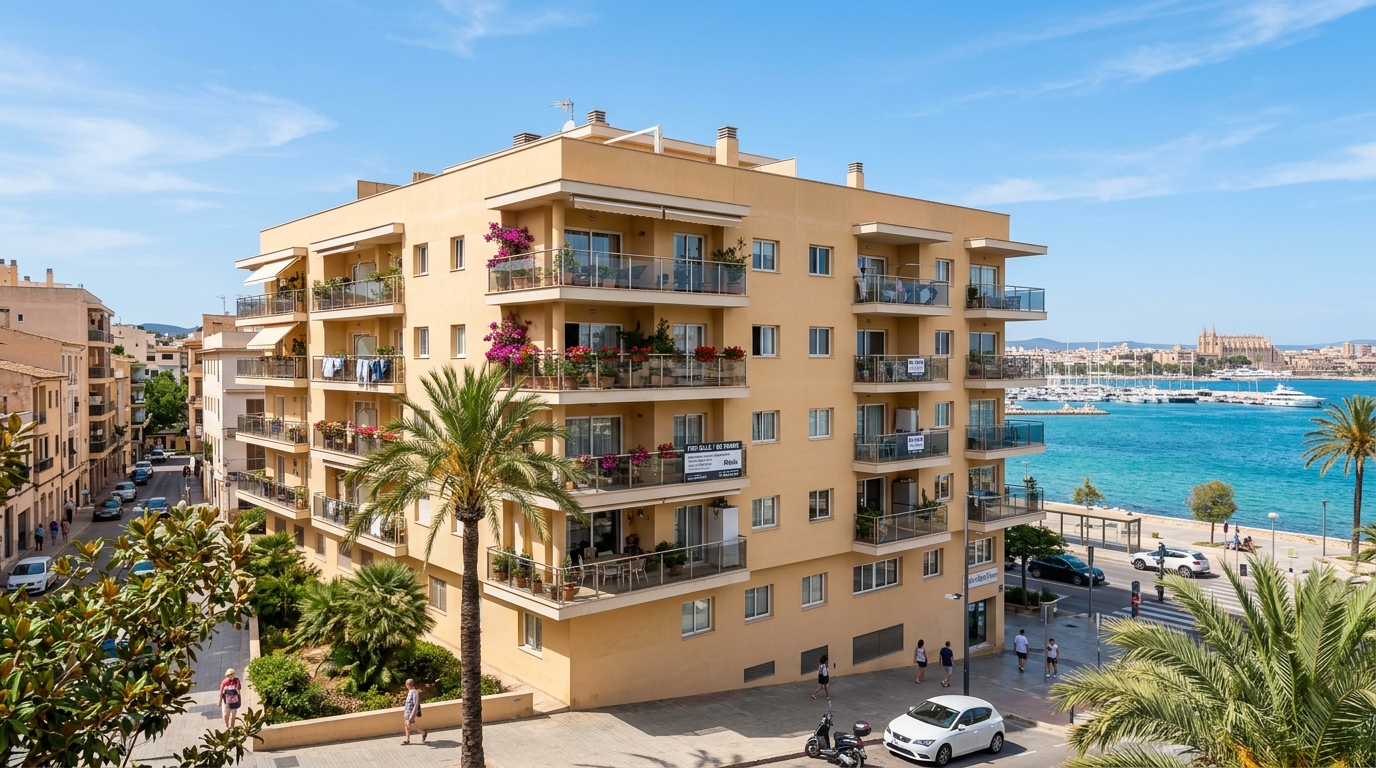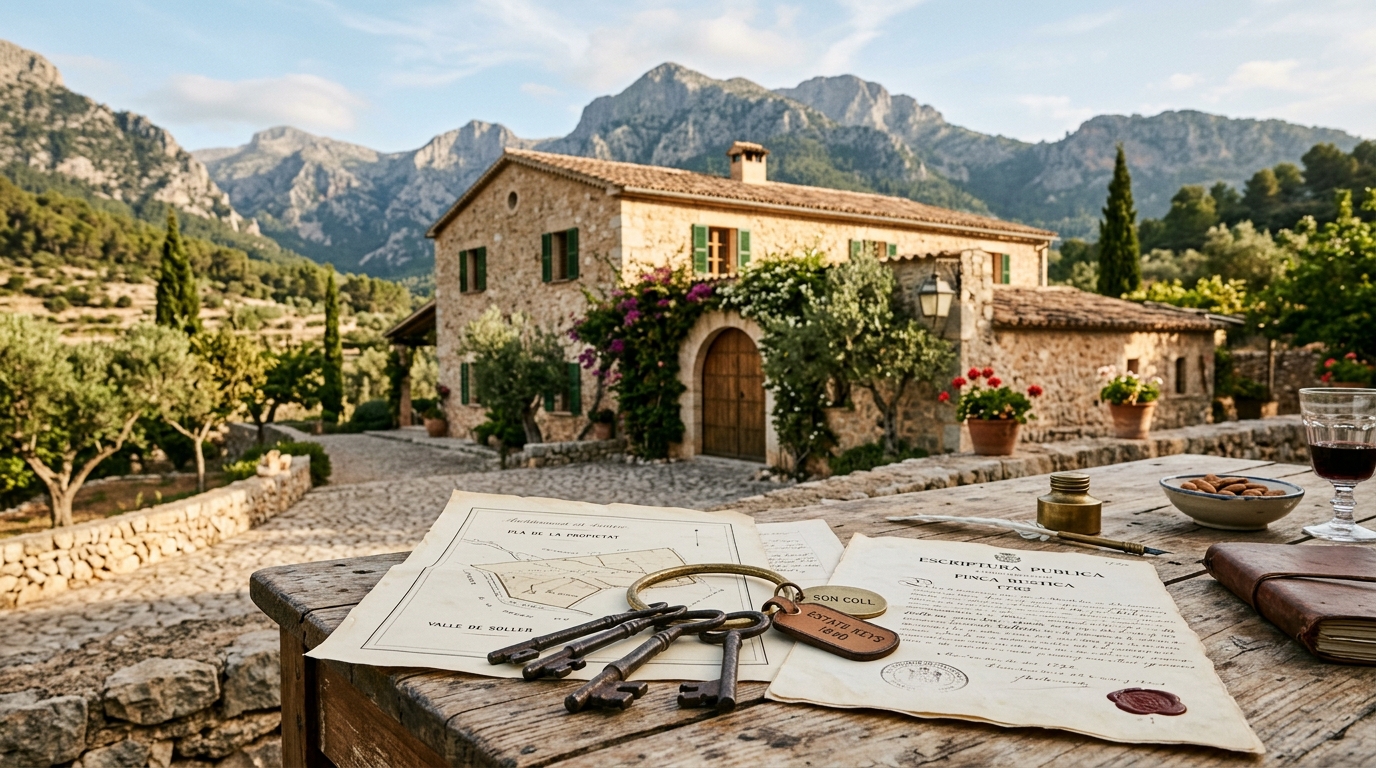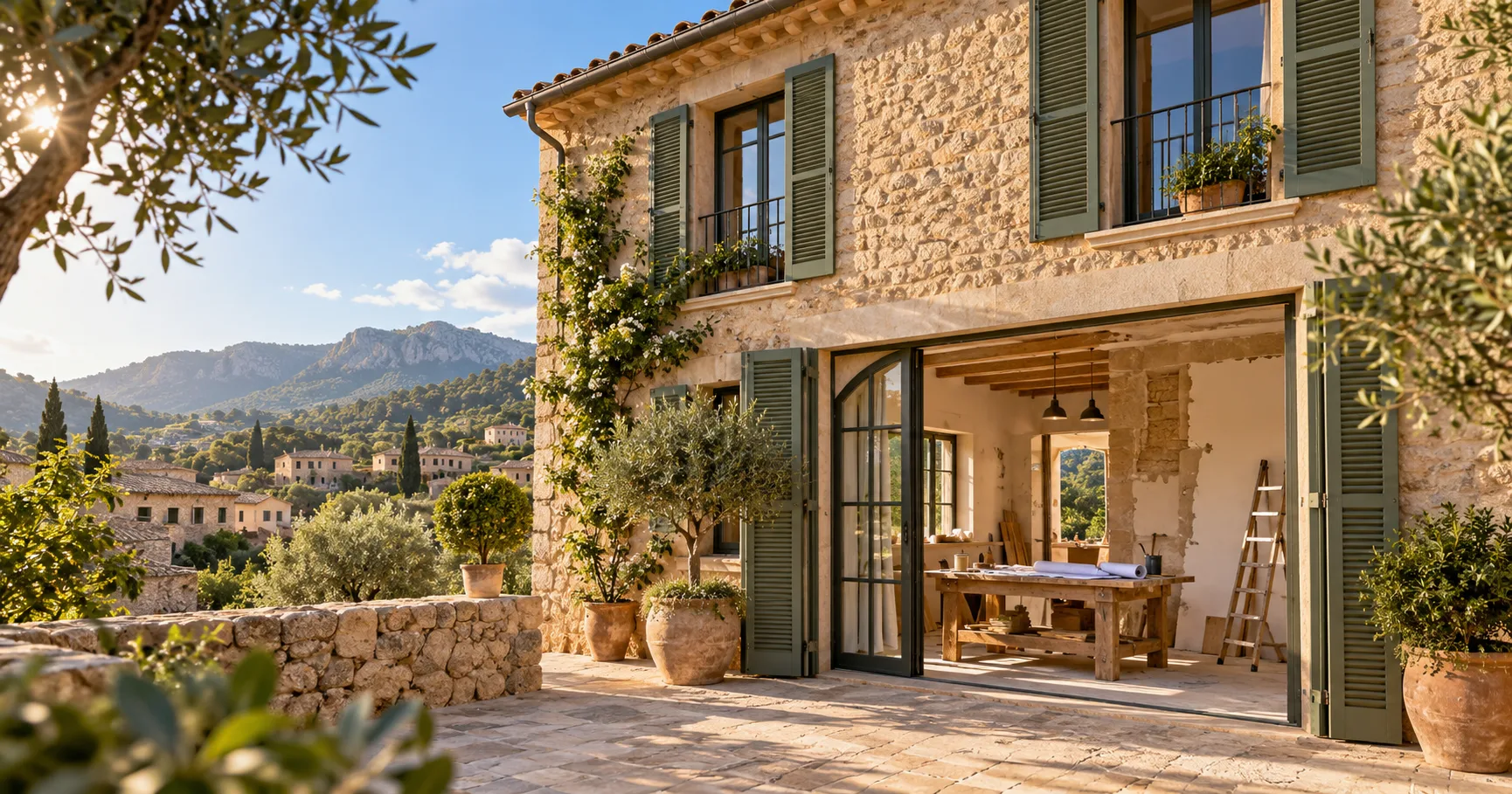
House flipping —the strategy of acquiring undervalued or outdated real estate, carrying out a comprehensive refurbishment, and selling the property within a short timeframe for a capital gain— has emerged as one of the most profitable investment models in Mallorca.
On an island defined by strict zoning constraints, soaring international buyer demand, and a severe shortage of new construction, renovating and upgrading existing residential inventory delivers the highest operating profit margins.
However, house flipping in Mallorca is not simply a matter of fresh paint and new flooring. Long-term profitability is decided at the moment of purchase, in rigid construction budget control, and in understanding the urban planning nuances of Mallorca’s 53 local municipalities.
This guide outlines the methodology, real financial models, and exclusive sourcing channels to execute successful property flips in Mallorca.
Why House Flipping Delivers Exceptional Returns in Mallorca
Unlike buy-and-hold landlords focused on recurring rental income, a property flipper prioritizes capital turnover speed. A standard project cycle spans 6 to 14 months:
$$\text{Acquisition (Month 1)} \longrightarrow \text{Permits & Renovation (Months 2–7)} \longrightarrow \text{Staging & Sale (Months 8–12)}$$
Key drivers in the Balearic market:
- Turnkey buyer demand: International buyers (predominantly from Germany, the UK, Switzerland, and Scandinavia) are willing to pay a substantial premium for move-in-ready, turnkey designer homes, avoiding the friction of coordinating overseas contractors.
- Structural land shortage: Environmental regulations and urban growth moratoriums make new developments scarce. Upgrading existing townhouses and apartments in established areas is the only scalable way to supply modern homes.
- Price spread between unrenovated and finished homes: The gap between a dated 1970s apartment in Palma and a fully refurbished Mediterranean contemporary property frequently exceeds €1,500 to €2,500 per square meter.
The Financial Model: Real Numbers for a Mallorca Flip
Professional investors target a net return on capital (ROI) of 20% to 30%, with gross margins robust enough to absorb unforeseen building delays or financing costs.
The core flipping formula:
$$\text{Maximum Purchase Price} = \text{Projected Resale Price} - \text{Renovation Costs} - \text{Transaction & Holding Costs} - \text{Target Profit}$$
Sample Real Deal in Palma (85 m² apartment in an established district):
- Purchase Price: €165,000 (€1,941/m²)
- Acquisition Taxes & Closing (8% ITP + Notary + Registry): ~€15,500
- Full Renovation Costs (€650/m² mid-to-high standard): ~€55,250
- Holding & Financing Costs (Community, utilities, IBI over 9 months): ~€2,500
- Disposal Costs (Agency fee 4% + Municipal Plusvalía Tax): ~€12,500
- Total Capital Invested: €250,750
- Final Resale Market Price: €315,000 (€3,705/m²)
- Net Pre-Tax Profit: €64,250 (~25.6% net return on invested capital within 10 months).
Mallorca Signals monitors over 220 data sources daily, detecting municipal ruin declarations, unlisted estate liquidations, and direct private sales with high flip potential.
Where to Source Properties with Real Profit Margins
The primary failure mode for beginners is browsing mainstream real estate portals. If a property has been publicly listed on Idealista for 6 months labeled “ideal for renovation”, the margin has likely evaporated.
Experienced flippers rely on primary data sources:
1. Municipal Ruin Orders and Enforcement Files (Town Hall Boards)
Mallorca’s 53 municipal councils publish official urban planning orders, repair requirements, and ruin declaration files on their noticeboards daily.
These legal documents identify properties where owners face municipal enforcement and fines if buildings are not promptly restored or demolished. For many heirs or elderly owners, selling rapidly to a cash flipper is the most practical option.
2. Distressed Inheritance and Judicial Seizures
Edicts concerning unclaimed estates, foreclosures, and urgent estate liquidations published in the BOIB provide access to long-vacant properties whose heirs prioritize quick liquidity over protracted marketing.
3. Direct Private Sellers
Direct negotiations with private owners eliminate substantial agency commissions. Filtering out undercover real estate brokers is vital to reaching genuine homeowners directly.
4. Official BOE Court Auctions
Spain’s BOE judicial auction portal in the Balearics regularly features seized homes sold at discounts of up to 40% against legal appraisal figures.
Municipal Planning & Permits: Navigating Town Hall Timelines
Time is the critical risk variable in house flipping. Every month of administrative delay incurs carrying costs and interest charges.
Balearic planning codes distinguish three primary permit routes:
- Responsible Declaration / Prior Notice (Comunicación Previa): For non-structural interior works (tiling, kitchen/bathroom upgrades, plumbing, electrical installations). Allows works to commence almost immediately upon filing. This is the ideal vehicle for a rapid 6-month flip.
- Minor Works License (Obra Menor): Internal non-loadbearing wall reconfigurations or window modifications. Typically processed within 1 to 3 months in major councils like Palma or Calvià.
- Major Works License (Obra Mayor): Mandatory when altering structural elements, roofs, protected historical facades, or building volumes. Caution: Major licenses in tourist municipalities can take 9 to 18 months, requiring careful financing structures.
5 Critical Pitfalls to Avoid
- Failing to verify the Habitability Certificate (Cédula): If an unhabitable unit cannot legally meet minimum ceiling heights, surface areas, or ventilation standards, it cannot be legally sold as a residence.
- Over-renovating for the location: Installing premium imported marble in lower-tier neighborhoods will not raise the resale price beyond the ceiling of the micro-market.
- Starting without contracted construction teams: Quality building contractors in Mallorca are booked months in advance. Delaying builder selection until after deed signing erodes time margins.
- Unresolved rustic land infractions: On rural land (suelo rústico), unpermitted extensions may carry active enforcement files from the Territorial Defense Agency (ADT).
- Mismatched Cadastral vs Registry surface records: Discrepancies between land registry deeds and Cadastre dimensions can stall bank mortgage valuations for your end-buyer.
Conclusion
House flipping in Mallorca continues to provide compelling returns for investors who combine analytical rigor, local permit management, and access to unlisted market intelligence.
The differentiator between average margins and a 25%+ net return is the ability to identify prime renovation assets before they reach the open market.